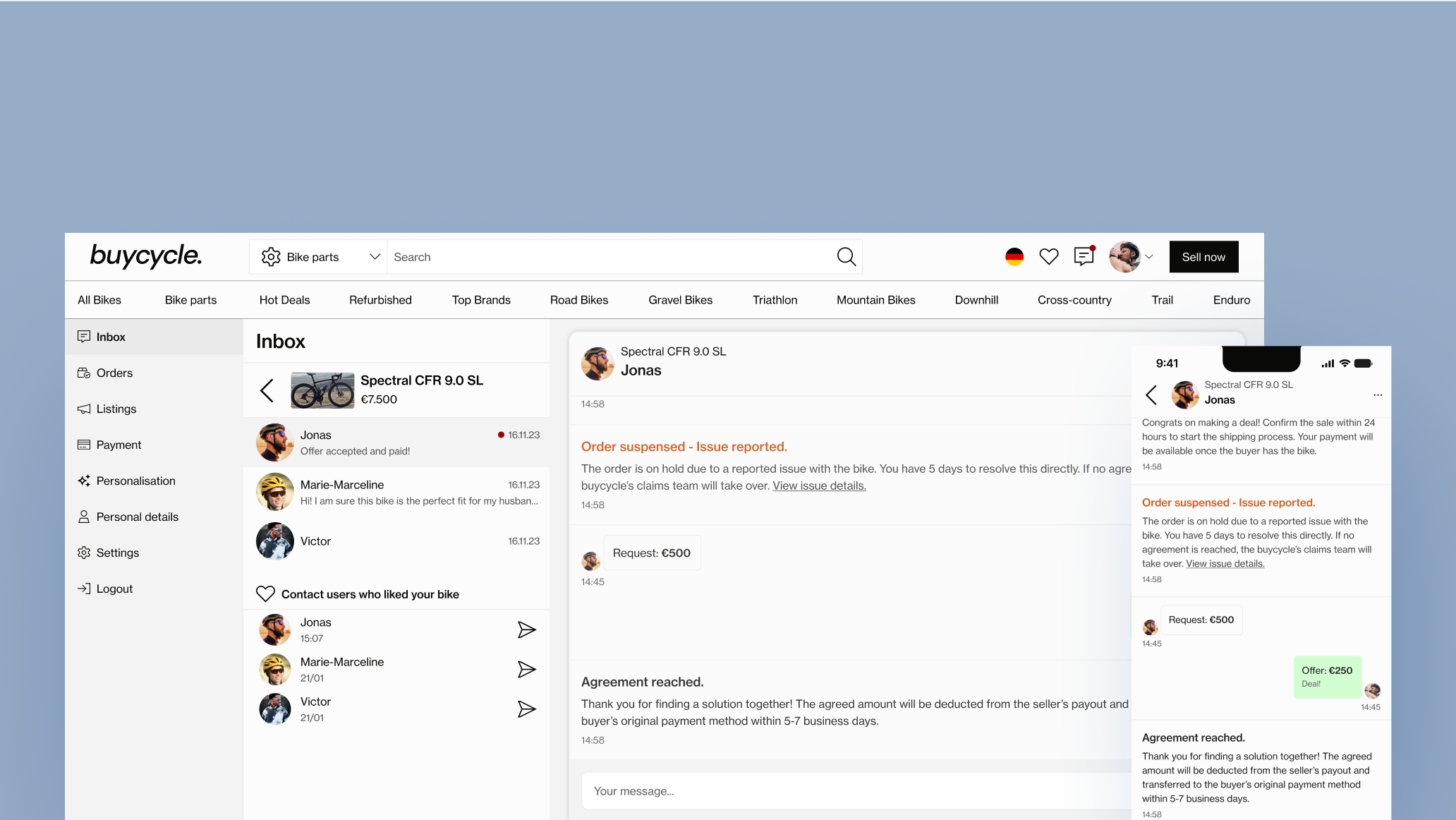
Claim Resolution Center
A better way to handle claims by letting users work things out themselves.
Background
Every claim became a case
All claims related to bikes, such as damage, missing parts, or delivery issues, had to be handled by support agents and often ended in reimbursements. Users had no way to resolve problems directly.
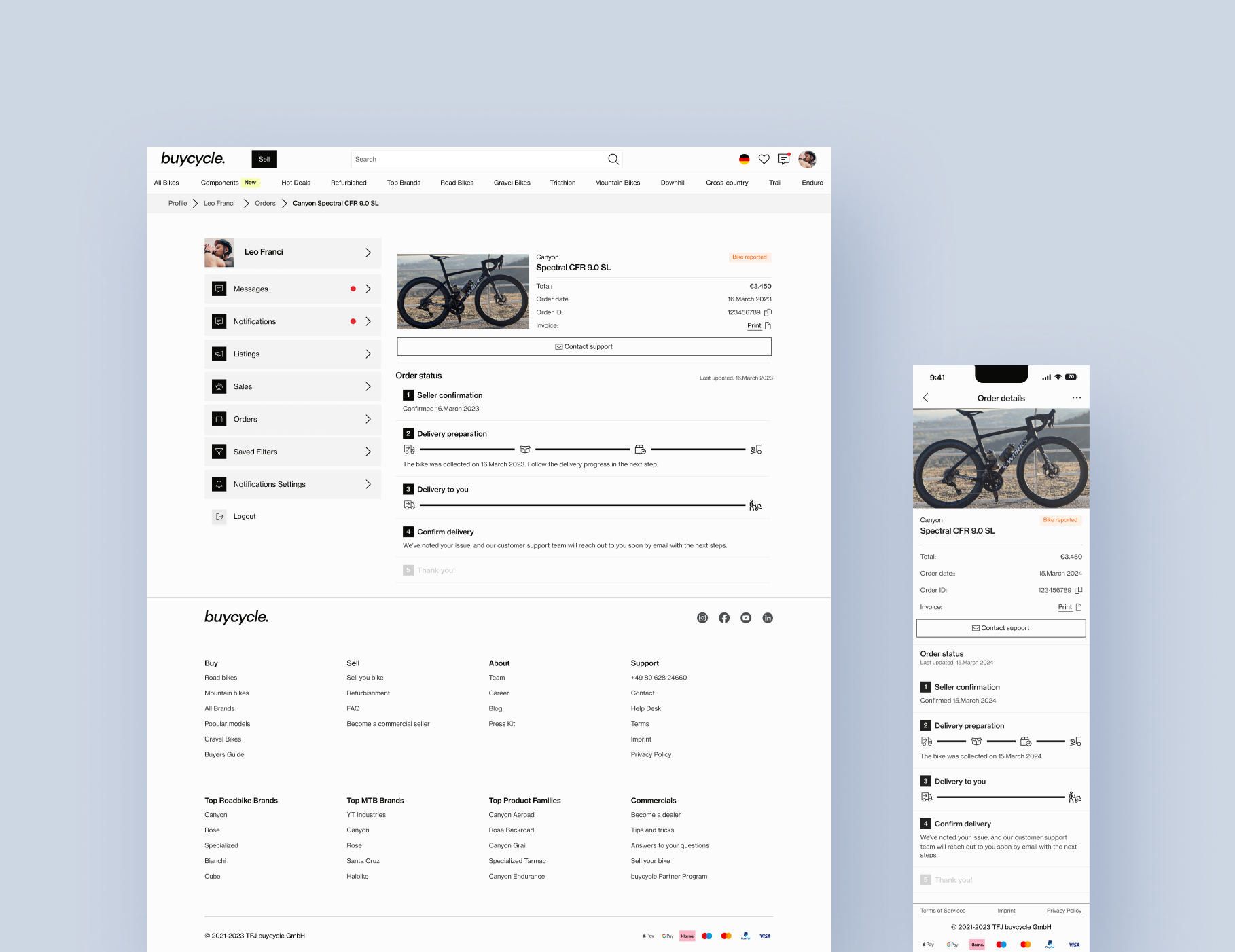
The old flow lacked visibility and interaction, leaving users waiting for support.
Over 90% of claims followed the same repetitive pattern, requiring multiple back-and-forth messages and agent time.
Key challenges
Lack of visibility after delivery
Once the buyer received the bike and reported the issue, the seller had no clear insight, making resolution difficult.
Claims handled only by support
All claims communication was handled exclusively by support agents, resulting in high refund rates and an inefficient process.
No clear process leads to inconsistent resolutions
There was no structured way to guide users toward fair resolutions, which led to inconsistent outcomes and frequent refunds.
User flow
Mapping the new resolution flow
I redesigned the claims flow to shift negotiations from support agents to the users themselves. The new experience guides buyers and sellers through clear steps, opens a direct chat between them, and offers structured options like retracting the claim, making an offer, or escalating.
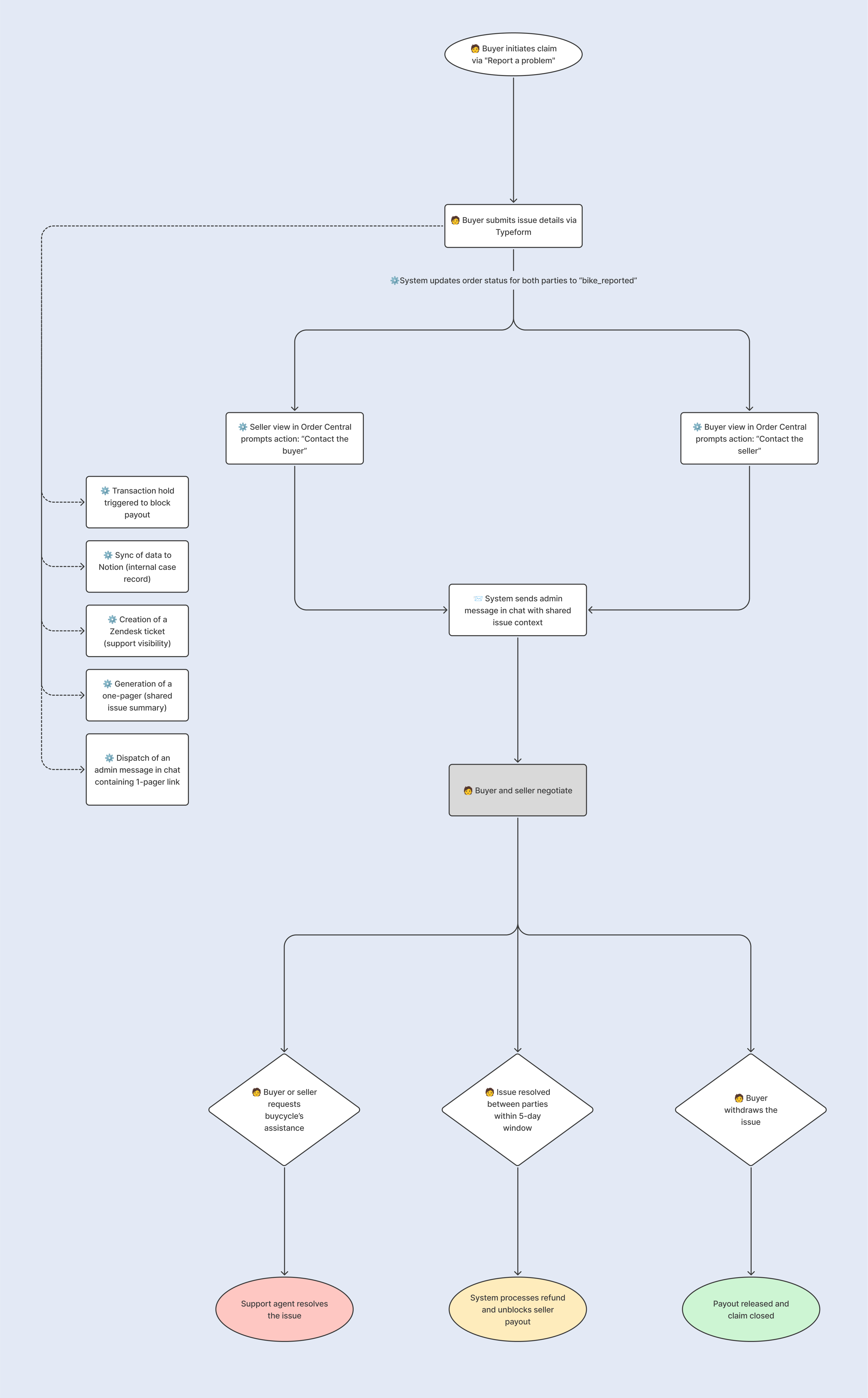
Decision flow
A closer look at user decisions
This decision map outlines how buyers and sellers resolve claims directly through guided chat interactions. It supports key actions like refund requests, counteroffers, and claim cancellations—escalating to support only when necessary. Creating this map helped define the main CTAs in the chat view, offering clear, contextual options that promote self-resolution.

Communication design
To support the new negotiation flow, we had to rethink how buyers and sellers were informed and guided through the claim. I designed several new chat-based touchpoints and customer support mechanics to make the process both intuitive and scalable.
Admin system messages in chat
Automated messages were introduced to inform both users about the claim status and timeline directly within the chat. Alongside these, we integrated contextual modals that allowed users to take action without leaving the conversation. This made the experience feel more guided and interactive.
1-pager design for shared claim details
A dedicated 1-pager now surfaces the buyer’s submitted claim, originally collected via Typeform, and makes it accessible to both buyer and seller. This visibility helped clarify the issue, reduce back-and-forth, and support more informed conversations.
Seamless escalation to support
Buyers and sellers can now escalate a claim to buycycle’s support team with a single click. This triggers a Zendesk ticket in the background, allowing customer success to step in when needed.
Impact
After launch, we took a close look at how the new Claim Resolution Center was working for users. The results revealed a strong move toward users handling issues on their own, with less need for specialist help.
of claims were resolved without the need for specialist intervention.
of claims were canceled after buyers and sellers reached an agreement through the resolution flow.